Driveway Washing Out and Rutting Every Storm? How Gravel and Grading Fix It
October 15, 2026
Quick Answer: A driveway washes out and ruts because water finds a path down the surface instead of leaving it. The usual causes are a flat or dished profile with no crown, too few fines in the gravel to bind it, a thin or soft base over wet clay, and ditches or culverts that dump water back onto the drive. The fix is a layered approach: reshape the driveway with a crown so water sheds sideways, rebuild the base with the right stone sizes, add fresh graded gravel with a binder, and give runoff a clear place to go. Gravel alone only hides the problem for a season, and grading alone cannot hold without enough good material.
You walk out after a night of heavy rain in the Ozarks and the driveway is not the one you left. The two wheel tracks have turned into little trenches. A fan of loose stone has spilled across the yard at the bottom of the slope. Down by the road there is a bare patch of red clay where the gravel used to be, and the puddle that sits there for days has a muddy edge that creeps a little farther every storm.
You have probably already tried the quick fix. A few loads of rock got dumped and spread, and it looked great for about a month. Then the next gully washer arrived and the same ruts opened up in the same places, often deeper than before. That pattern is the clue. When a driveway keeps failing in the same spots, the gravel is rarely the whole story. Water is following a path you built into the shape of the drive, and until that path changes, new rock just becomes more material to carry downhill.
Why Ozarks Driveways Fail in the First Place
Southwest Missouri is hard on gravel. The ground under most rural drives is clay mixed with chert, and clay sheds water slowly, so the surface soaks, softens, and loses strength exactly when a loaded truck or a delivery van rolls over it. Add slopes, long runs from the road to the house, and rain that arrives in bursts instead of gentle showers, and you have the three ingredients of a washout: a lot of water, a lot of speed, and a surface that cannot hold together.
Water moving across a driveway behaves like any other stream. The faster it runs, the more it can carry. A flat driveway lets it spread and stall on the surface, which soaks the base. A dished driveway, one that has worn lower in the middle than at the edges, turns the whole drive into a channel. A driveway that slopes straight downhill gives water a smooth, steady chute with nothing to slow it. Whichever version you have, the water takes the loose gravel first, then the fines that were holding the rest together, and then it starts cutting into the base underneath.
Ruts show up in a related way. Tires press the same two strips over and over. If the stone is loose, clean, and rounded, it rolls out of the way and leaves a groove. If the base underneath is thin or wet, the wheel track sinks instead of rolling. Once a groove forms, it becomes the lowest path on the whole drive, so every storm sends its runoff straight down it. The rut and the washout feed each other.
The Shape of the Driveway Matters More Than the Stone
Most people look at a failing driveway and think about material. A good crew looks at shape first, because a well shaped drive sheds water before it has time to do damage.
The main feature is the crown. A crowned driveway is higher in the center than at the edges, like the back of a shallow arch. A common guideline for gravel roads and drives is a drop of roughly half an inch to three quarters of an inch for every foot out from the center. On a ten foot wide lane that works out to about five to seven inches of fall from the middle to the edge, which is much more than most people expect. It should look slightly rounded, not flat. With that profile, rain runs off sideways in a thin sheet the moment it lands instead of running down the lane.
The simple way to check your own driveway is with a long straight board and a level. Lay the board across the lane and see which way the bubble leans. If the center is low or flat, water is already being held on the surface. Many washed out drives turn out to have no crown at all, or a crown that wore flat years ago when the edges built up into small berms. Those berms trap runoff and force it down the middle, which is the opposite of what you want.
Tip: Before you order any rock, walk the drive during a steady rain and watch where the water actually goes. Note where it pools, where it crosses the lane, and where it leaves the property. That one walk tells a contractor more than any measurement, and it often shows that the fix is a single low spot or blocked outlet, not the whole driveway.
Where the Water Goes After It Leaves the Surface
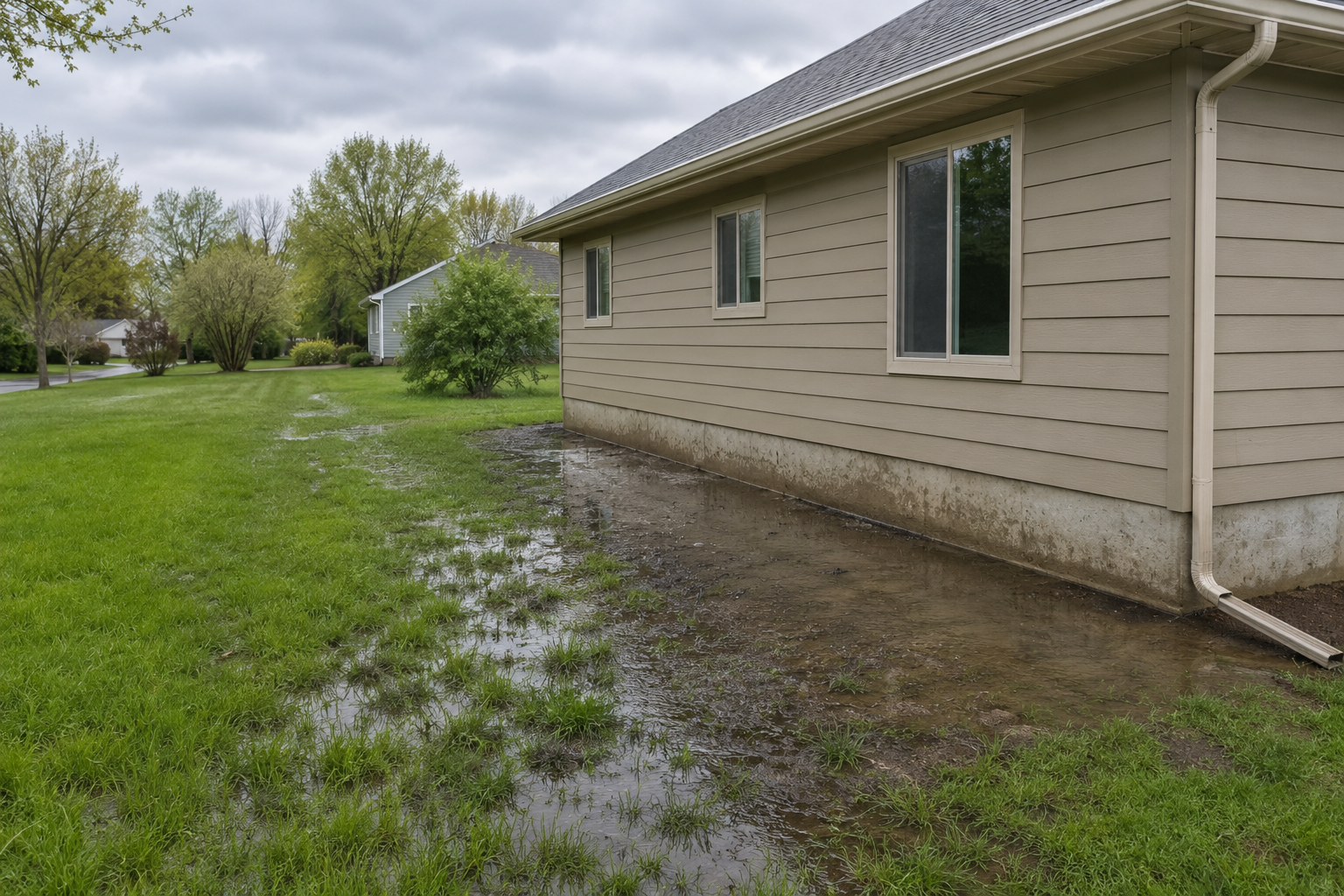
Crowning only works if the water has somewhere to go once it reaches the edge. This is where many repairs fall apart. The edge of the drive fills with soil, weeds, or leaves, and the berm that forms blocks the exit. The water that was supposed to sheet off sideways stacks up against the berm, then breaks through at the weakest point and cuts a gully.
A working drainage plan usually has a few parts:
Open Edges
Shoulders should slope away from the driveway without raised lips. Cut back old berms to let water drain across the entire length rather than concentrating runoff.
Turnouts And Diversions
Long or steep driveways need regular openings or shallow cross channels to divert runoff. Maintain water bars or rolling dips to prevent water from following wheel tracks.
Ditches That Stay Clear
Keep roadside ditches flowing freely. Sticks, leaves, or collapsed banks can block drainage, forcing water back onto the roadbed and increasing erosion and washout risks.
Culverts That Match The Flow
Install adequately sized culverts at the correct grade, keeping both ends clear. Undersized or buried pipes cause repeated washouts, especially where fast outlet water strikes bare soil.
On a hillside property, where the drive may run along a slope for hundreds of feet, this planning matters even more. Water that starts at the top of the run can gather volume all the way down, which is why the bottom third of a long driveway is usually the part that washes out first.
What Is Under the Gravel Decides How Long It Lasts
The top layer is what you see, but the base is what holds. A driveway built by spreading a thin layer of rock on bare clay will sink into the clay the first time it gets wet and stays soft. Rock and clay mix, the surface turns to mud, and the rock disappears a little more every year. People often say the gravel has been eaten, and in a sense it has.
A properly built driveway uses layers, each with a job. The bottom layer is larger, coarse stone that spreads load and lets water move through. Above it goes a middle layer of mid sized rock that locks together. The top layer is the driving surface, a graded mix that packs tight. Depth depends on soil and traffic, but a driveway meant to carry trucks, trailers, or a loaded propane delivery needs far more than a few inches. Poor soil, soft spots, and heavy use all call for more depth. Each layer should be placed in lifts and compacted, not just dumped and raked, because loose layers settle and form the very dips that start the ruts.
On clay that stays wet, a geotextile fabric between the soil and the first stone layer can keep the two from mixing. It separates the base from the soft ground and lets the rock keep its strength. It is not a magic fix for a bad shape, but on the right ground it noticeably extends the life of a drive.
Warning: Do not fill ruts by dumping clean, washed stone into them and walking away. Clean stone has no fines to hold it together, so it rolls under tires and washes out faster than the material it replaced. Repairs need graded gravel that includes the smaller sizes, and the low spots need to be reshaped first, not just covered.
Why the Kind of Gravel You Choose Changes the Result
Not all gravel behaves the same, and this is where the delivery side of the job matters. Washed, single size stone looks clean and drains quickly, but it has nothing to bind it. It acts like marbles on a hard floor. For a driving surface, most contractors prefer a graded mix, often described as a three quarter inch or one inch minus. The largest stone is that size, and the mix includes everything smaller, down to fine particles. Those fines work as a binder. When the surface is compacted and wetted, they lock the larger stones in place so tires roll over a firm surface instead of pushing stone aside.
There is a balance. Too many fines turn muddy and soft in wet weather. Too few leave a loose surface that washboards and scatters. The base layer usually wants less fines for drainage, while the top wants enough to bind. This is why a driveway built entirely from one type of rock often fails, and why asking for the right material for each layer matters more than asking for more material.
Local stone varies too. Crushed limestone, which is common across southwest Missouri, packs well and holds a firm surface. Chert gravel is hard and angular, which helps it lock, though sharp pieces can be rough on tires if the top layer is not sized correctly. A supplier who delivers around Bolivar, Springfield, and Lebanon usually knows what is available nearby and what has held up on similar ground.
Fixing a Driveway That Already Washes Out
When a drive has been failing for a few years, the most durable repair follows a sequence, and skipping steps is how the same ruts come back.
- Find the water. Walk the drive in rain, mark the paths, and find where runoff enters and leaves.
- Fix the exits first. Clear ditches, cut back berms, reset or add turnouts, and check culverts. If water cannot leave, nothing else will last.
- Reshape the drive. Cut the high shoulders, fill the low center, and rebuild the crown so it sheds water the whole length. On long runs, add diversions at intervals.
- Repair the base where it failed. Soft spots get dug out and rebuilt with proper stone, not covered over. Anywhere the clay is pumping up through the rock, the base needs real attention.
- Add the right gravel. Bring in graded material, spread it to the new profile, and compact it so the fines bind.
- Maintain it. Regrade when the surface is soft, usually after a rain, and at the first sign of wheel tracks, especially on hills.
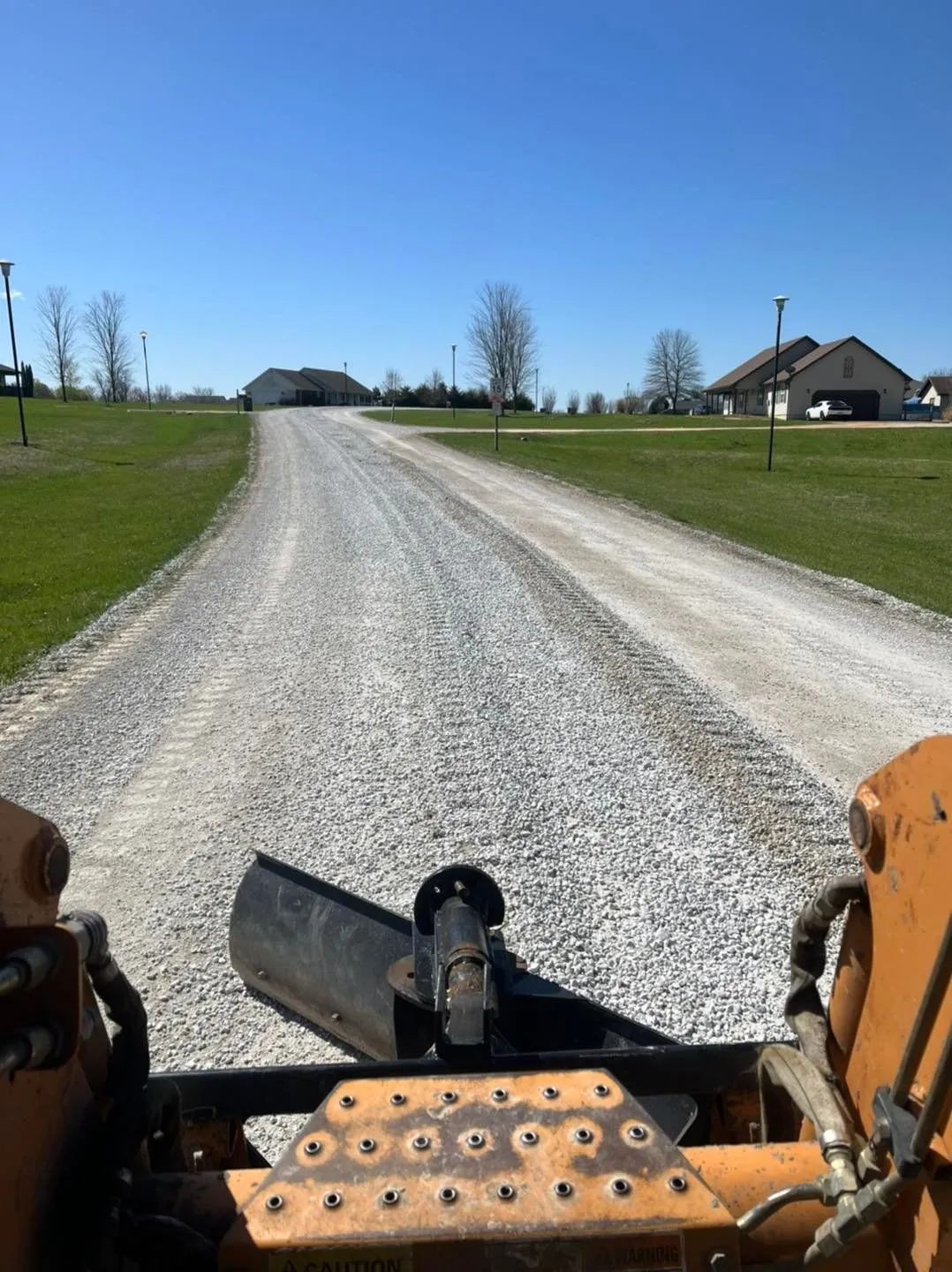
Maintenance is the part people skip, and it is far less work than a full rebuild. A quick pass with a grader blade or box scraper after a soaking rain pulls loose stone back to the center and restores the crown before a small rut turns into a trench. Grading when the surface is bone dry just makes dust, and grading when it is soup just makes mud. The right window is when it is damp and firm enough to pack.
Special Cases Worth Knowing About
Some driveways need more than the standard approach.
Steep Grades
Steep driveways need closely spaced water bars, stronger base construction, and sometimes hard surfacing to control fast-moving runoff and prevent gravel erosion.
Low Spots At The Road
Driveway entrances often erode when vehicles drag gravel onto roads or roadside water flows inward. Proper grading and culverts protect both surfaces.
Long Rural Drives
Long rural driveways cross multiple drainage patterns. Divide them into sections to manage runoff as water gains speed and volume downhill.
Heavy Equipment And Deliveries
Driveways handling cement trucks, livestock trailers, or fuel deliveries need stronger foundations designed for heavy loads rather than ordinary passenger vehicles.
Planning the Work Around Ozarks Weather
Timing affects the result. Dry spells make it easier to dig, reshape, and compact, and the base needs to be firm and dry underneath before the top gravel goes down. Laying new rock on a saturated driveway buries the wet problem under a new layer. Many owners schedule the work after the wettest part of spring, or in early fall, so that the new surface has time to settle and bind before the heaviest storms return. If a washout has cut the drive off completely, a temporary repair can restore access, followed by the full fix when conditions allow.
Frequently Asked Questions
Why does my gravel driveway wash out in the same places every time?
Water follows the lowest path. Dips, blocked exits, or a missing crown collect runoff every storm, and fresh gravel does not change that path, so the channels reopen.
How much crown should a gravel driveway have?
A common target is half an inch to three quarters of an inch of drop per foot from center to edge. On a ten foot lane, that means several inches of fall.
What kind of gravel resists washing out best?
A graded minus mix with stones down to fine particles locks together when compacted. Clean single size stone drains well but has no binder, so tires and heavy rain move it.
Can I just add more gravel to stop the ruts?
Only if the shape and base are sound. If water still funnels down the wheel tracks or the base is soft, new rock washes away. Reshape and repair first.
How often should a gravel driveway be regraded?
It depends on traffic and slope, but regrade when ruts first appear and after major storms. Steeper, busier drives need it more often. Grade when the surface is damp, not dry or soaked.
Do I need a culvert or ditch on my driveway?
Yes, if water crosses or collects along the drive. A ditch carries runoff away, and a culvert gives water a safe path under the lane. Keep both clear.
Is fabric under the gravel worth it?
On wet clay or soft ground, yes. Geotextile keeps soil and stone from mixing and helps the base hold strength, working best alongside a compacted base and crowned surface.
Shaping a Driveway That Sheds Every Storm
A driveway that washes out every storm is showing exactly where the water wants to go. Reading that message, correcting the shape, building a base that carries the load, and choosing gravel that binds instead of rolling turns a yearly repair into a lasting surface. The goal is a lane that lets rain leave quickly, stays firm under tires, and needs only light grading to keep its form. On Ozarks clay and slopes, that combination separates a drive you maintain from one you keep rebuilding.
Reeds Excavation and Trucking
has worked on
driveways
in Bolivar, MO for 20+ years, and that time has shown how local clay, slopes, and sudden downpours behave on a gravel surface. Reshaping the crown, clearing the exits for runoff, and hauling the right graded material for each layer all come from that hands-on history. The result is a driveway that holds its gravel through heavy rain and gives owners a dependable route to the road in every season.