Clearing Overgrown Acreage? Forestry Mulching vs. Grub-and-Haul, and Which Your Project Needs
August 24, 2026
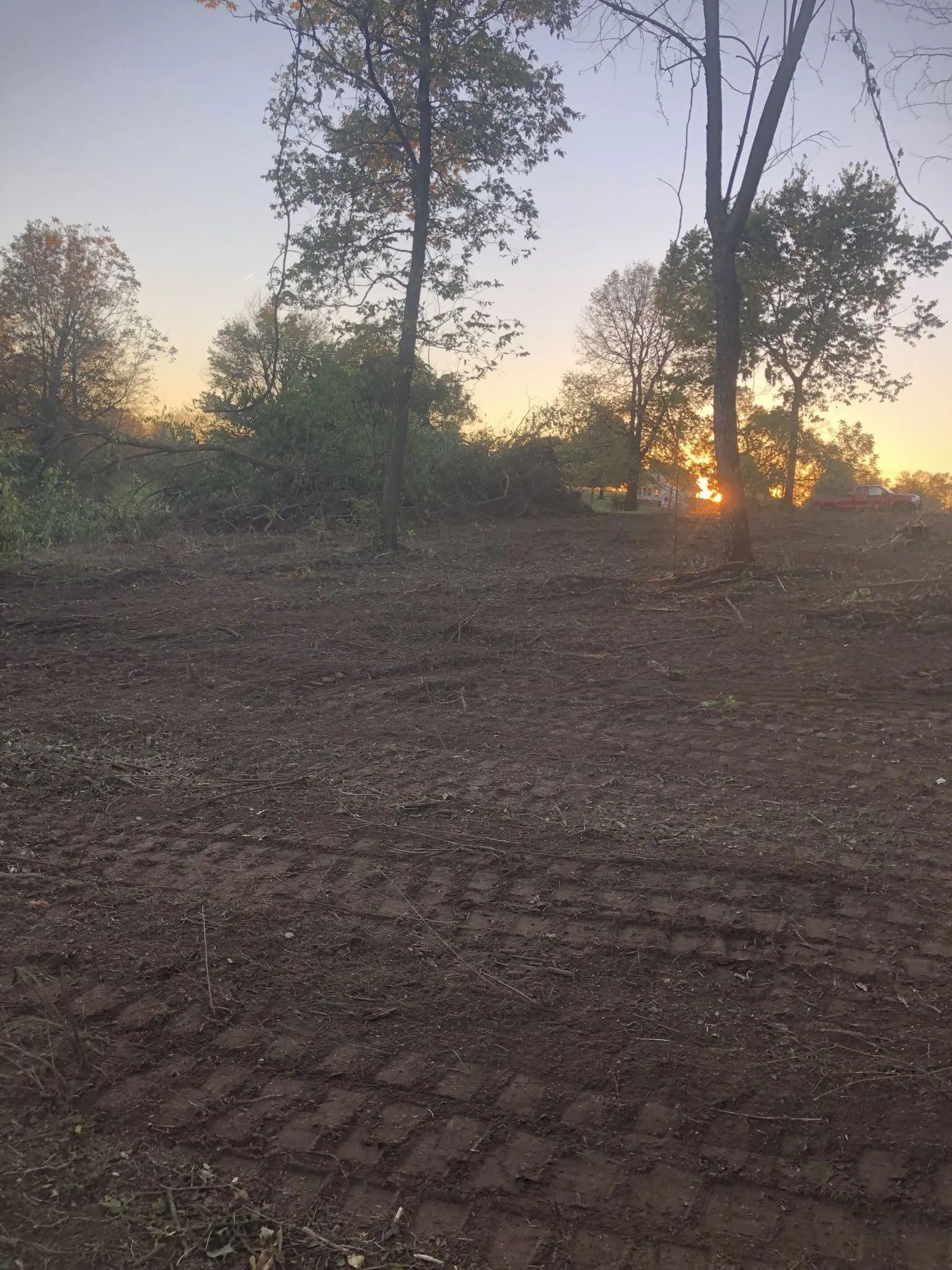
Quick Answer: Forestry mulching grinds standing trees and brush in place into a mulch mat and leaves the roots in the ground, which makes it fast, low-disturbance, and good for pasture, trails, views, and land reclamation. Traditional clearing dozes and grubs the vegetation out, pulls the stumps and roots, and hauls the debris off, leaving bare, gradeable, root-free soil. If you are keeping the ground as ground, mulching usually wins on speed and erosion. If you are building a pad, driveway, pond, or septic field, the stumps and roots have to come out or the ground settles later. On rocky Ozark slopes and in thick cedar, the right call depends on the end use more than on the trees themselves.
You are standing on twenty acres you finally have plans for. Some of it is cedar so thick you cannot walk a straight line through it. Some is head-high brush and blackberry that took over an old pasture, and there is a stand of bigger hardwoods along the draw. The ground underneath is the rocky clay you already know from every fence post you have set, and it pitches downhill toward a wet-weather branch that runs hard after a storm. You want part of it opened up for grazing, and somewhere on the high side you want a building site.
That mix of goals on one piece of ground is where the method question comes up. There are two main ways to take overgrown or wooded Ozark acreage down to something usable, and they do not produce the same result. One leaves a blanket of ground-up wood over intact soil. The other leaves bare dirt you can shape. Pick the wrong one and you pay for it, either in money you did not need to spend or in a redo you did not see coming.
How forestry mulching works and what it leaves
The Machine and the Single Pass
A forestry mulcher uses a tracked carrier or skid steer with a rotating drum fitted with steel or carbide teeth. It grinds trees, brush, vines, and saplings where they stand, spreading shredded material across the ground without separate felling, piling, or loading.
What It Leaves Behind
Mulching leaves several inches of shredded material over undisturbed soil. Stumps are ground flush or slightly below grade, while roots remain underground. Existing topsoil and root mats stay intact, allowing the mulch to settle, decompose, and support new grass growth.
What It Handles Well
Forestry mulching works especially well on dense brush, saplings, thorny vegetation, and small to medium trees. Many machines handle growth around six to eight inches in diameter, depending on equipment and species. It suits overgrown pastures, fencerows, cedar thickets, and fields.
The Erosion Side of It
Because mulching leaves soil undisturbed, the resulting mulch mat immediately protects the surface from runoff. On slopes and clay soils, this helps slow water movement, retain moisture, and reduce erosion while vegetation returns. Preserving topsoil is especially valuable where shallow soils overlie rock.
How grub-and-haul clearing works and what it leaves
A Multi-Step Operation
Traditional clearing involves several stages, including pushing vegetation over, grubbing roots and stumps, piling debris, hauling material to licensed disposal facilities, and grading the exposed ground. Each step prepares the property for construction or another planned use.
What It Leaves Behind
Traditional clearing produces an open, workable surface with stumps, roots, and organic material removed. The ground can then be cut, filled, compacted, and graded as needed. This stable preparation makes it suitable for building pads, driveways, ponds, and other improvements.
The Disturbance Tradeoff
Removing vegetation and roots exposes soil to erosion until the area is graded, stabilized, or covered. Proper drainage and grading help direct runoff while protecting the site during construction. Managing exposed soil is especially important during heavy Ozark rainfall.
Tip:
When your acreage carries more than one goal, you do not have to pick a single method for the whole tract. Mulch the back that is going to pasture or trails, and grub-and-haul only the footprint where the pad, drive, or pond is going. Deciding that split before any machine shows up keeps you from paying to fully clear ground that only needed brush knocked back.
Stumps, roots, and why settlement is the whole story
Ground Flush Is Not the Same as Gone
Mulching grinds stumps near the surface but leaves roots underground. That works for pastures, trails, and cleared views where the ground carries no structural load. Roots can decompose naturally without creating significant problems for those uses.
Under a Structure, It Is a Different Problem
Building sites require clearing and grubbing to stable subgrade, removing stumps, roots, and organic material. Buried roots can decay and create voids, causing settlement beneath slabs, footings, driveways, ponds, or septic areas. Proper preparation creates stable, predictable ground.
Why the Method Has to Match the Load
The best clearing method depends on what the ground must support. Construction requires complete stump and root removal, while nonstructural uses may benefit from leaving roots undisturbed. Matching the method to the end use avoids unnecessary disturbance and expense.
Rocky slopes and cedar thickets, Ozark-style
What Rock Does to Each Method
Rocky clay and shallow stone can influence the clearing method more than vegetation does. Mulcher teeth are designed for wood, so exposed rock can cause damage and slow production. Excavation handles rock better, but increases stump removal, grading, and site preparation effort.
Slopes
Tracked mulchers perform well on moderate slopes and uneven ground, while leaving protective mulch behind to reduce runoff and erosion. Full clearing exposes soil, requiring additional grading and drainage measures. That preparation makes sense when construction is planned but may be unnecessary elsewhere.
Cedar
Eastern red cedar has expanded throughout Missouri, overtaking pastures, glades, fields, and other open areas. Mulching works well for reclaiming cedar-choked acreage because the trees grind efficiently. However, construction sites still require complete stump and root removal before grading.
Warning: Do not treat the mulch mat as a planting bed or a building base. A fresh, deep layer of ground wood ties up nitrogen as it breaks down and can hold back new seeding until it settles, so ground bound for pasture or food plots often needs the mat lightly worked to get seed to soil. And a mulch layer over intact roots is never a stand-in for grubbed, compacted subgrade under anything you intend to build.
Speed and effort, in plain terms
Speed
Mulching is generally faster for the same acreage because it collapses felling, piling, hauling, and grading into one pass with one machine. Grub-and-haul is slower because each of those steps is separate and the debris has to physically leave the property.
Effort And Steps
Mulching skips the hauling, disposal, and separate grading that traditional clearing requires, so for reclamation goals it is the lighter job. Full clearing carries the added work of pulling stumps, trucking debris to a licensed facility, and grading the exposed ground. That added work is not wasted when you are building, because it produces the root-free, gradeable, compactable surface a pad, drive, pond, or septic field has to have. The honest way to compare the two is not by acreage in isolation but against what the finished ground actually needs to do.
Matching the method to your goal
Reach for Mulching When the Ground Stays Ground
Choose mulching for overgrown pastures, trails, shooting lanes, views, cedar thickets, old fields, fence lines, and wildlife habitat. Keeping roots intact is acceptable, while mulch cover, speed, and minimal soil disturbance provide useful advantages.
Reach for Grub-and-Haul Plus Grading When You Are Building
Building pads, driveways, roads, ponds, and septic fields require stumps and roots removed completely. Grading and compaction create stable ground that supports structures, maintains elevations, and drains properly without future settlement from buried organic material.
And Often, Both
Many properties benefit from combining methods. Mulch acreage where roots can remain, then grub, haul, grade, and compact areas planned for construction. Evaluate drainage areas separately based on whether structures or improvements will be nearby.
Demolition and debris, on the same page
Clearing acreage often comes with an old structure to deal with. A fallen-in barn, a former home site, a shed, or foundation remnants sitting right where you want to work. Controlled site demolition, from small residential structures up to larger commercial buildings, belongs to the same clearing job, because the debris it produces has to be handled the same responsible way the trees and brush do: separated, loaded, and hauled to licensed disposal facilities rather than buried on site. Bury construction debris or organic material in a spot you later build on or drive over, and you invite the same settlement problem as leaving stumps in the ground. Tying demolition, brush and tree removal, debris haul-off, and grading into one coordinated plan is how the whole tract ends up usable instead of half-cleared with new problems in it.
Frequently Asked Questions
Does forestry mulching get rid of the stumps?
No. Forestry mulching grinds stumps near ground level but leaves roots underground. That works for trails, pasture, and views, but construction areas require separate stump and root removal to create stable ground.
Can I put a building, driveway, or pond where I had land mulched?
Not without additional preparation. Mulching leaves roots and organic material that eventually decompose and cause settlement. Construction footprints need grubbing, removal of unsuitable material, grading, and compaction before building.
Which method is better for erosion on a sloped property?
Mulching generally offers better immediate erosion control because it leaves protective mulch across undisturbed soil. Traditional clearing exposes bare ground, requiring grading and stabilization. However, construction areas still need root-free, properly prepared surfaces.
Why is everyone around here clearing eastern red cedar?
Eastern red cedar has expanded across Missouri as natural fire patterns changed. It can overtake pastures, glades, and open fields. Clearing restores usable acreage, improves views, and reclaims grassland before cedar becomes dense.
Is mulching or full clearing faster?
Mulching is usually faster because one machine can process vegetation without separate hauling and disposal. Full clearing takes longer because it includes stump removal, debris handling, and grading, but produces ground suitable for construction.
What happens to an old barn or house on the property?
Old structures can be incorporated into a controlled demolition and clearing project. Debris should be separated and hauled to licensed disposal facilities rather than buried onsite, especially where future buildings, driveways, or other improvements are planned.
Reading the Ground Before Any Machine Arrives
The method is not a preference, it is a match to the end use. Ground staying pasture, trail, glade, or view does well with the fast, low-disturbance pass that leaves cover behind and the roots where they are. Ground meant to carry a building, a road, a pond, or a septic field needs the stumps and roots gone and the surface graded and compacted, because organic material left underneath comes back later as settlement.
Most acreage around Bolivar, Missouri is a mix of both situations, which is why the plan matters more than the machine. Reeds Excavation and Trucking
has spent 20+ years working rocky, sloped, cedar-heavy ground in this region, mulching where the land stays land and grubbing, hauling, and grading where something is going to be built. Walking the property first and marking that split is what keeps a cleared tract genuinely usable once the work is finished.