Water Pooling Around the House After an Ozarks Downpour? Why Grading Failed
July 17, 2026
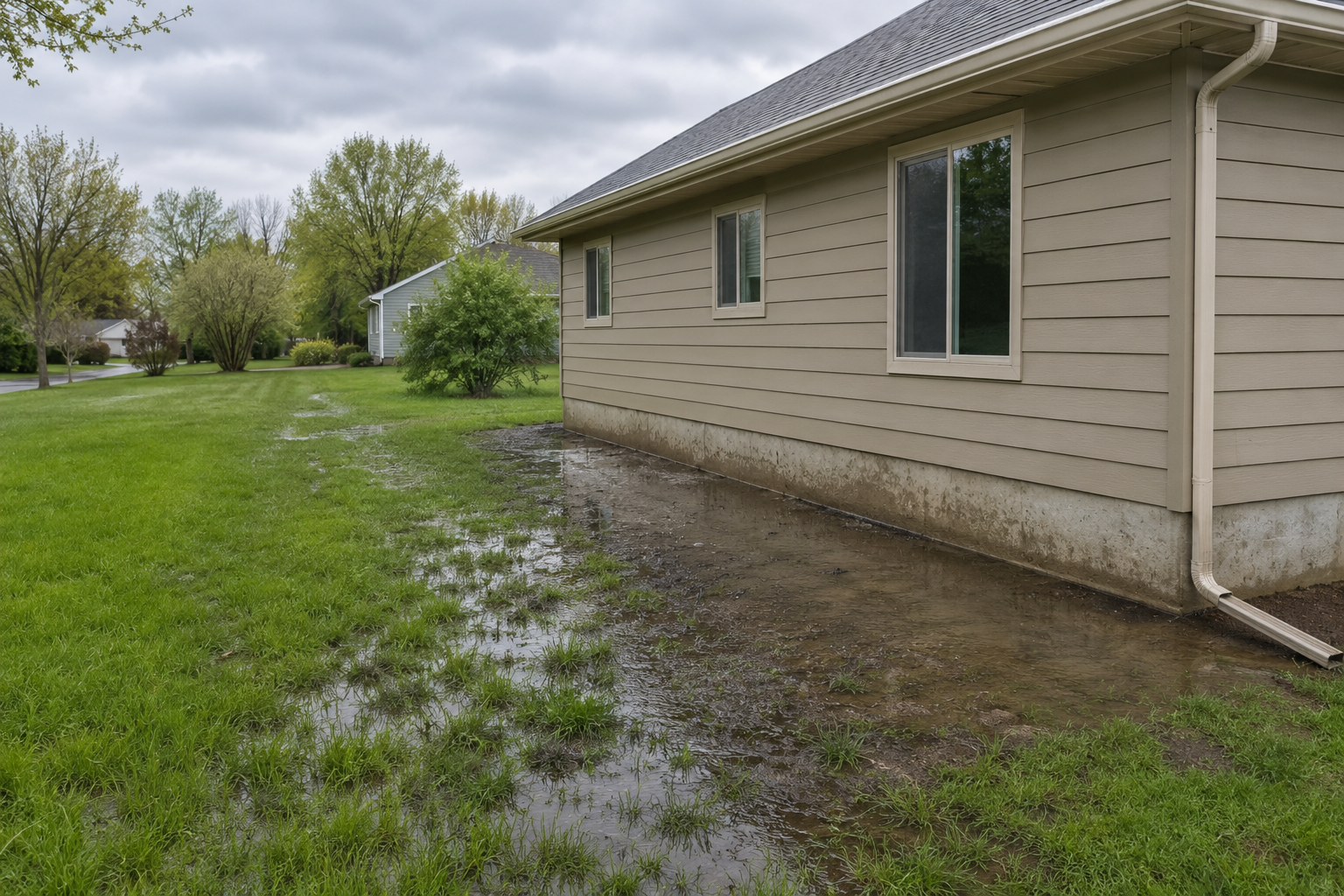
Quick Answer: Water pools against the house after a downpour when the ground no longer slopes away from the foundation the way it should. The fix starts with the grade: the ground within the first 10 feet of the wall should fall at least 6 inches, which is roughly a 5 percent slope, so water runs off instead of sitting. Backfill settling, heavy clay subsoil that will not let water soak in, and low spots that trap runoff are the usual reasons a grade that once worked has quit working. Regrading to reestablish that fall, and adding a swale or drain where the slope alone cannot carry the water off, is what moves the water away for good.
The rain finally lets up, you walk out to check the yard, and there it is again: a sheet of standing water sitting right against the foundation, a soggy strip that never seems to dry, and mud tracked halfway to the door. After a hard Ozarks downpour the low corner by the house turns into a shallow pond, and every storm it comes back to the same spot. You did not do anything different, so why is the water suddenly collecting where it never used to?
When water pools around the house instead of running off, the grade around your foundation has failed at its one job. Grading is the shaping of the ground so gravity pulls water away from the structure rather than toward it. When that slope flattens out, reverses, or gets swallowed by heavy clay that will not drain, the water has nowhere to go but down against the wall and into the low spots. Here is what is actually going wrong under your feet, why the rocky clay ground around here makes it worse, and how the grade gets corrected.
What Proper Grading Is Supposed to Do
The ground around a house is not supposed to be flat. It is supposed to tilt away from the foundation on every side so that when rain hits, it sheets off and away instead of soaking in against the wall. That deliberate slope is the whole point of finish grading, and there is a well-established target for it.
The International Residential Code, the model code most jurisdictions build from, calls for the ground to fall at least 6 inches within the first 10 feet measured out from the foundation wall. That works out to about a 5 percent slope, according to code references summarized by the home-inspection organization InterNACHI and the U.S. Department of Energy's Building America Solution Center. Hard surfaces like a concrete patio or driveway sitting within 10 feet of the house are held to a gentler minimum of 2 percent away from the building. The Building America guidance frames the same idea a different way: slope permeable ground away from the house at least half an inch per foot for the first 10 feet.
The reason those numbers matter is simple. Water that is pulled away in the first few feet never gets the chance to pond against the wall or saturate the soil next to the foundation. When you see water pooling instead, that fall is gone somewhere, and finding where is the first step.
Why a Grade That Worked Before Suddenly Fails
Backfill settling that flattens or reverses the slope
When a home is built, loose backfill around the foundation naturally settles over time. As the soil compacts after rainfall and seasonal changes, the original slope can flatten or reverse, directing water back toward the foundation instead of away. This gradual settling commonly creates drainage problems years later.
Clay subsoil that will not let water soak in
Heavy clay soil found around Bolivar, Missouri, absorbs water very slowly and stays saturated after extended rainfall. Even when the surface appears properly sloped, water can remain trapped because the clay beneath prevents drainage. Once saturated, additional rainfall simply flows across the surface and collects in low areas.
A low corner or swale that collects everyone's runoff
Water naturally follows the lowest point on a property. If one corner or swale sits below the surrounding landscape, runoff from roofs, driveways, neighboring lots, and the yard itself gathers there. Even with acceptable grading elsewhere, that single collection point repeatedly floods during every significant rainfall.
Downspouts and hard surfaces dumping at the wall
Driveways, patios, sidewalks, or downspouts that discharge water beside the foundation can overwhelm otherwise effective grading. Concentrated runoff repeatedly saturates the same area, increasing erosion and foundation moisture. Redirecting downspouts and correcting surface slopes helps move water safely away before it creates long-term drainage problems.
Why Ozarks Ground Makes Pooling Worse
The soil and terrain in this part of Missouri stack the deck against easy drainage, and it is not your imagination that water problems here feel stubborn.
Start with the clay. Heavy clay subsoil is slow to absorb water and quick to stay saturated, so after one of our long, soaking spring rains the ground has no capacity left to take on more. Everything that falls after saturation runs off across the surface, and it collects wherever the grade dips. On sandier ground water would percolate down and disappear; on Ozarks clay it lingers, and that is the difference between a yard that dries in a day and one that stays soggy for a week.
Then add the terrain. Much of the rural acreage around here sits on slopes, and rock is often close to the surface. A lot that slopes toward the house instead of away turns the whole hillside into a funnel aimed at your foundation, and shallow rock can keep water from ever draining downward, forcing it to move sideways along the surface until it hits your low spot. Heavy, concentrated downpours, the kind that drop a lot of rain in a short window, then deliver more water at once than any marginal grade can shed.
Put those together and you get the classic pattern: a grade that limped along fine through gentle rains suddenly gives out during the big storms, and the same low corner floods year after year. The underlying fault, a flat or reversed slope over clay that will not drain, was probably there a while. The heavy rain is just what exposes it.
How the Grade Gets Diagnosed and Fixed
Because the same puddle can come from a flat grade, settled backfill, clay that will not drain, or a trapped low spot, sorting out the real cause takes looking at the whole picture, not just the wet spot. The work starts by reading the lot: which way the ground actually falls on each side of the house, where the low points are, where roof and driveway runoff is going, and how the surrounding terrain feeds water toward the building.
From there the correction is about reestablishing the fall the code target describes: reshaping the ground so it drops away from the foundation over those first several feet, filling in the low areas that trap water, and compacting the reworked soil so it holds its shape instead of settling back into a bowl. Where there simply is not room to get a full slope, because a lot line, a slope, or a hard surface is in the way, Building America's guidance is to carry the water off another way, with a swale, a shallow shaped channel that routes runoff around the house, or a drain designed to move it to a lower outlet.
On our clay, surface grading often needs a partner. A French drain, a gravel-filled trench with a perforated pipe that carries collected water downhill to a lower outlet, is a common fix for the low areas where clay subsoil will not let water soak away on its own. A dry creek bed can move surface water off along a shaped stone channel while doubling as a yard feature. The right combination depends entirely on how your lot drains, which is exactly why the diagnosis comes before the dirt work. What you end up with is a yard shaped to shed water on its own, with the runoff that the slope alone cannot handle routed deliberately away from the house.
Any regrading near a foundation, along with where runoff is allowed to discharge, is worth checking against Polk County requirements and, on a bigger or trickier site, an engineer's input. Those are considerations to fold in during planning, not afterthoughts.
Frequently Asked Questions
How much should the ground slope away from my house?
Ground should generally slope at least six inches within the first ten feet from the foundation. This directs rainwater safely away, reducing soil saturation, foundation stress, and the risk of moisture intrusion around your home's exterior walls.
Why does water pool against my house even though my yard looks sloped?
Water may still collect because heavy clay soil drains slowly, hidden low spots trap runoff, or grading reverses near the foundation. Even if the yard appears sloped, drainage problems can remain beneath the surface unnoticed.
Why did my drainage get worse over the years when nothing changed?
The most common cause is settling backfill around the foundation. As soil naturally compacts over time, the original slope flattens or reverses, allowing rainwater to collect near the house instead of flowing safely away naturally.
Can I just fill the low spot with dirt to stop the pooling?
Simply adding dirt rarely solves the problem. Proper grading reshapes the entire slope so water drains away naturally, while deeper low areas may also require swales or French drains for lasting, effective drainage performance.
Does grading alone fix pooling on clay soil?
Sometimes grading alone works, but heavy clay often requires additional drainage solutions because it absorbs water slowly. French drains or swales help redirect excess runoff, preventing standing water from repeatedly collecting near your home's foundation.
Is standing water near the foundation actually a problem or just annoying?
Standing water should never be ignored because saturated soil increases pressure against foundations, encourages moisture intrusion, promotes erosion, and contributes to long-term structural movement. Correcting drainage early helps prevent expensive repairs and recurring water problems.
Getting the Water Moving Away Again
Water pooling against the house after a downpour is the grade telling you it has quit doing its job. The slope that is supposed to pull rain away in the first 10 feet has flattened, reversed, or been overwhelmed by clay subsoil that will not drain and low spots that trap every storm's runoff. The heavy Ozarks rains do not create the problem so much as expose the flat or failing slope that was already there. The fix is not a bag of topsoil against the siding; it is reading how your lot actually drains, reshaping the ground to shed water the way the code target describes, and carrying off the runoff the slope alone cannot handle with a swale or drain.
Schedule a
drainage and grading assessment — Standing water against your foundation is not going to dry out on its own, and every Ozarks downpour deepens the low spot and keeps the soil next to your wall saturated. With 20 years of experience, Reeds Excavation and Trucking reads how your lot really drains, reestablishes the fall away from the foundation, fills and compacts the low areas that trap runoff, and adds a swale or French drain where our clay ground needs the extra help to carry water off. Proudly serving Bolivar, Missouri, and the surrounding region, we provide drainage and grading solutions that protect your property from recurring water issues. Reach out to Reeds Excavation and Trucking to get your grade corrected before the next big storm sends the water back to the same corner.